
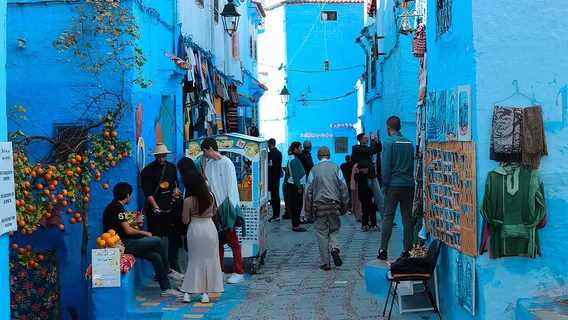
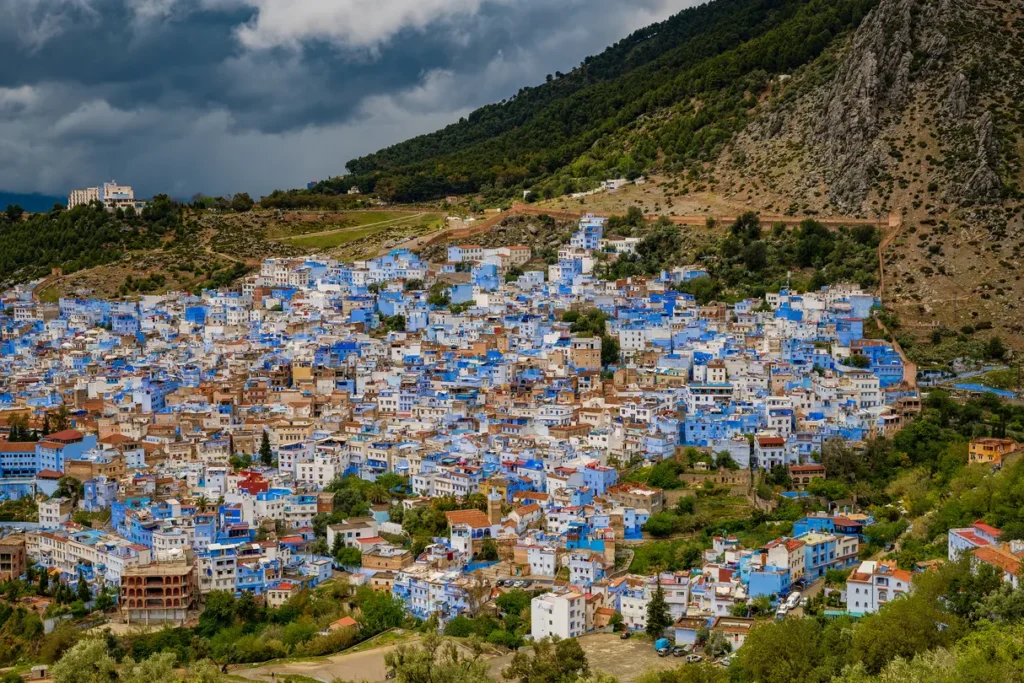
Nestled in the Rif Mountains of Morocco, Chefchaouen is a charming town known for its blue-painted buildings and relaxed atmosphere. This picturesque destination, often referred to as the Blue City, offers a unique blend of natural beauty and cultural richness.
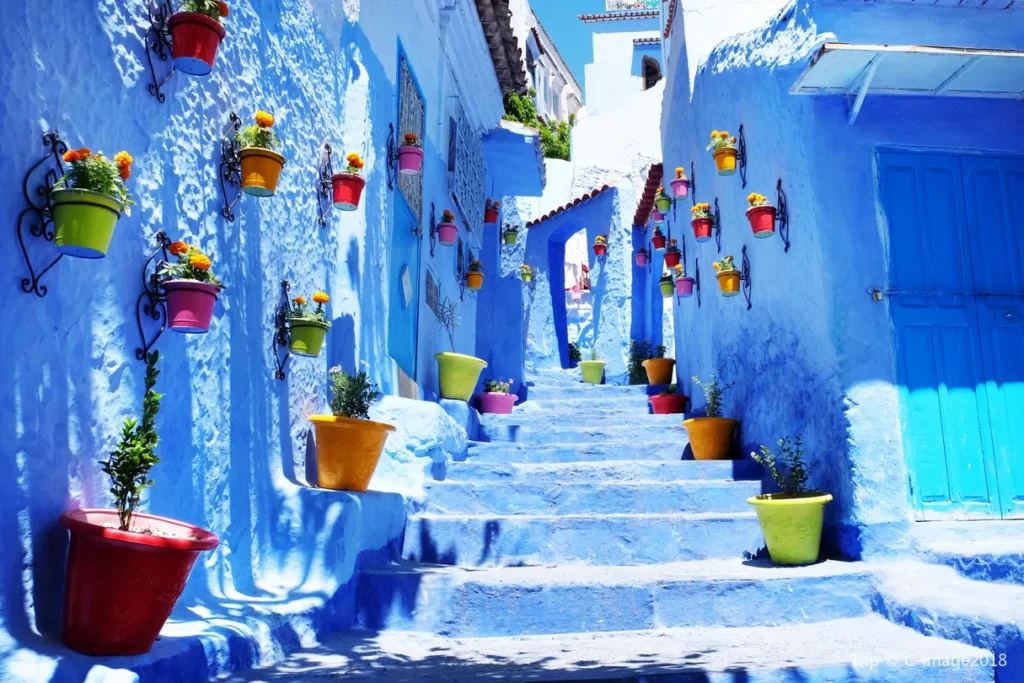
Visitors to Chefchaouen can explore its winding streets, visit historic sites, and enjoy the local cuisine. As a travel guide, this article will provide insights into the top experiences to be had in this captivating town, from its stunning landscapes to its vibrant cultural scene.
Key Takeaways
- Explore the blue-painted buildings of Chefchaouen
- Experience the local culture and cuisine
- Visit historic sites and enjoy the natural beauty
- Get insights into the top travel experiences
- Discover the charm of the Rif Mountains
The Enchanting Blue Pearl of Morocco
Nestled in the Rif Mountains, Chefchaouen is a picturesque town known for its blue-painted buildings, earning it the nickname “Blue City.” This charming town in northern Morocco has become a must-visit destination for travelers seeking a unique cultural experience.
Why Chefchaouen Is Called the Blue City
The tradition of painting buildings blue is believed to have started in the 1930s when Jewish refugees arrived in Chefchaouen. The blue color is thought to symbolize the sky and heaven, and it has since become an integral part of the town’s identity. The blue hue not only adds to the town’s aesthetic appeal but also creates a sense of tranquility.
Brief History and Cultural Significance
Chefchaouen was founded in 1471 as a small fortified town, or kasbah, and has a rich history influenced by various cultures, including Spanish, Arab, and Berber. The town’s cultural significance is evident in its architecture, cuisine, and traditions. Chefchaouen’s history is a blend of different civilizations, making it a fascinating place to explore.
What Makes Chefchaouen Unique
Chefchaouen’s unique blend of cultures, history, and natural beauty sets it apart from other destinations in Morocco. The town’s relaxed atmosphere, coupled with its stunning blue architecture, makes it an attractive destination for tourists. Visitors can enjoy hiking, exploring the medina, and experiencing local cuisine, making Chefchaouen a memorable experience.
| Aspect | Description |
|---|---|
| History | Founded in 1471, influenced by Spanish, Arab, and Berber cultures |
| Cultural Significance | Rich cultural heritage evident in architecture, cuisine, and traditions |
| Unique Feature | Blue-painted buildings creating a surreal landscape |
Planning Your Visit to Chefchaouen
Before you embark on your journey to Chefchaouen, Morocco’s enchanting Blue City, it’s essential to plan your visit carefully.
Best Time to Visit the Blue City
The best time to visit Chefchaouen is during the spring (March to May) and autumn (September to November), when the weather is mild and pleasant.
Summer can be quite warm, while winters are cool, especially in the evenings.
How to Get to Chefchaouen from Major Cities
Chefchaouen is accessible by bus or taxi from major cities like Tangier and Marrakech.
The nearest airport is in Tangier, from where you can take a bus or taxi to Chefchaouen.
Recommended Duration of Stay
A stay of 3 to 4 days is recommended to explore the city’s main attractions and experience its relaxed atmosphere.
Accommodation Options for All Budgets
Chefchaouen offers a range of accommodation options, from budget-friendly riads and guesthouses to luxury hotels.
Booking in advance is advisable, especially during peak travel seasons.
By planning your visit to Chefchaouen carefully, you can ensure a memorable and enjoyable experience in this beautiful Moroccan city.
Exploring the Medina: Heart of the Blue City
At the heart of Chefchaouen lies its vibrant medina, a labyrinth of blue alleyways waiting to be discovered. The medina is not just a geographical center; it’s the soul of the Blue City, pulsating with life, culture, and history.
Navigating the Blue Alleyways
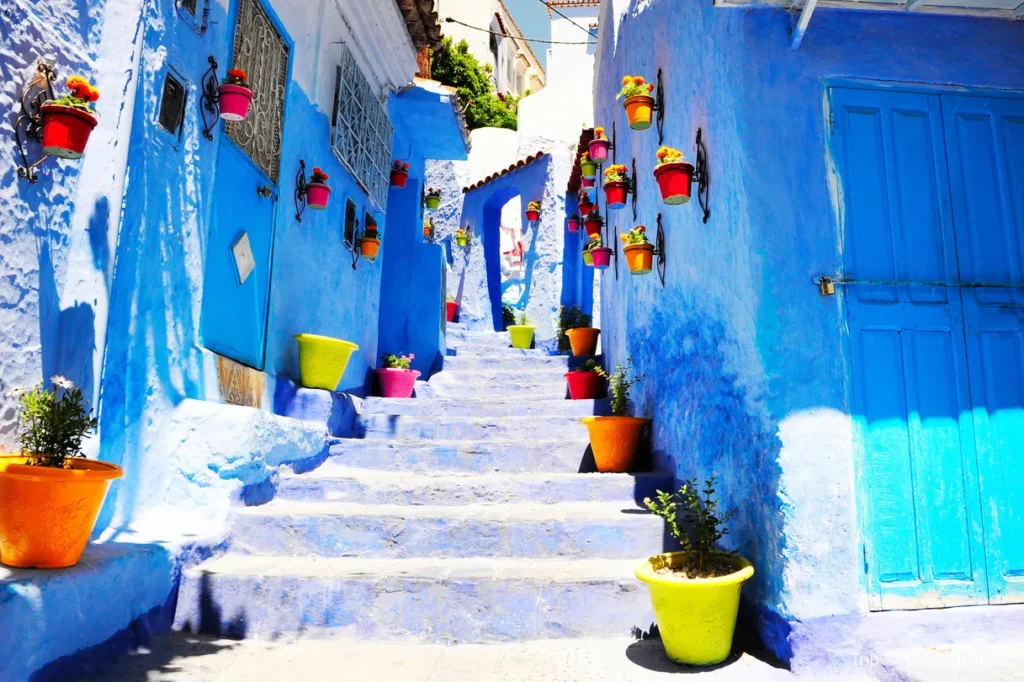
Navigating the medina’s narrow paths can be a delightful adventure. The alleyways are lined with blue-painted buildings, creating a surreal atmosphere. Visitors can easily get lost in the medina’s twists and turns, but that’s part of its charm.
Photography Spots in the Blue Labyrinth
The medina offers countless photography opportunities. From the vibrant blue walls to the intricate doorways and the lively street scenes, every corner is a potential shot. Early morning and late afternoon are ideal times for capturing the soft, golden light that enhances the blue hues.
Shopping for Local Crafts and Souvenirs
Shopping in the medina is a treat, with numerous stalls selling local crafts, handmade jewelry, and traditional clothing. Visitors can find unique souvenirs that reflect the local culture. Bargaining is part of the experience, and it’s generally expected.
Interacting with Locals in the Medina
Interacting with the locals adds a rich layer to the medina experience. The residents of Chefchaouen are known for their hospitality. Visitors can engage with locals through language exchange, cultural workshops, or simply by enjoying a cup of tea together.
| Aspect | Tips | Benefits |
|---|---|---|
| Navigating | Take your time, get lost, and explore | Discover hidden gems and unique experiences |
| Photography | Visit during golden hour, be respectful | Capture stunning images, respect local culture |
| Shopping | Bargain, look for local crafts | Unique souvenirs, support local artisans |
| Interacting | Be open, learn a few local phrases | Meaningful connections, enriching experiences |
Best Attractions in Chefchaouen, Morocco’s Blue City
Exploring Chefchaouen reveals a plethora of historical, cultural, and natural attractions that make it a unique destination. The city’s charm is encapsulated in its blue-painted buildings, winding streets, and significant landmarks.
Plaza Uta el-Hammam and the Kasbah
The heart of Chefchaououen’s historic district is Plaza Uta el-Hammam, a vibrant square surrounded by cafes and significant buildings like the Kasbah. The Kasbah, with its fortress-like structure, offers a glimpse into the city’s past.
The Kasbah Museum and Its Exhibits
Within the Kasbah lies the Kasbah Museum, which houses a collection of artifacts that tell the story of Chefchaouen’s history and culture. Visitors can explore exhibits showcasing traditional crafts, historical objects, and more.
Grand Mosque and Religious Sites
The Grand Mosque is another significant attraction, representing the city’s religious heritage. Visitors can admire its architecture and understand its importance in the local community.
Ras El Ma (Waterfall) and Washing Stations
Nature lovers will enjoy visiting Ras El Ma, a picturesque waterfall and washing station where locals do their laundry. It’s a unique blend of natural beauty and local culture.
Hidden Gems Off the Tourist Path
Beyond the main attractions, Chefchaouen has hidden gems waiting to be discovered. Exploring the narrower streets and alleyways can lead to unexpected views and experiences.
- Discover local artisans and their crafts
- Enjoy the local cuisine at family-run restaurants
- Explore the surrounding mountains for hiking trails
Hiking Adventures Around Chefchaouen
Hiking in Chefchaouen reveals the region’s untouched charm and breathtaking landscapes. The area surrounding the Blue City is rich in natural beauty, with numerous trails that cater to different skill levels and preferences.
Sunset Trek to the Spanish Mosque
A popular hike is the sunset trek to the Spanish Mosque, which offers panoramic views of Chefchaouen and the surrounding mountains. The trek is moderately challenging and rewards hikers with stunning vistas at dusk.
Day Trips to Akchour Waterfalls and God’s Bridge
For those looking to explore beyond Chefchaouen, day trips to Akchour Waterfalls and God’s Bridge are highly recommended. These natural wonders are accessible via scenic hiking trails that wind through the Rif Mountains.
Exploring Talassemtane National Park
Talassemtane National Park is another must-visit destination for nature lovers and hikers. The park is home to diverse flora and fauna, as well as several hiking trails that offer breathtaking views of the surrounding landscape.
Essential Hiking Tips and Safety Precautions
When hiking around Chefchaouen, it’s essential to be prepared. Here are some key tips:
- Wear comfortable hiking shoes and suitable clothing.
- Bring plenty of water and snacks.
- Use a map or GPS device to navigate trails.
- Be aware of the weather forecast and potential hazards.
| Hike | Difficulty Level | Duration |
|---|---|---|
| Sunset Trek to Spanish Mosque | Moderate | 2 hours |
| Akchour Waterfalls | Challenging | 4 hours |
| Talassemtane National Park | Varies | Varies |
Culinary Experiences in Chefchaouen
Visitors to Chefchaouen can indulge in a variety of culinary experiences that showcase the best of Moroccan cuisine. The city’s culinary landscape is rich in traditional flavors and local ingredients, making it a paradise for food enthusiasts.
Local Moroccan Dishes to Try
Chefchaouen offers a range of delicious Moroccan dishes that are sure to tantalize your taste buds. Some must-try dishes include:
- Tagine: A slow-cooked stew named after the earthenware pot in which it is cooked.
- Couscous: A traditional North African dish made from semolina flour, often served with vegetables and meat.
- Pastilla: A savory pie made with layers of flaky pastry, meat, onions, and spices.
Best Restaurants, Cafés, and Rooftop Terraces
Chefchaouen is home to numerous restaurants, cafés, and rooftop terraces that offer stunning views of the Blue City. Some top recommendations include:
| Establishment | Type | Description |
|---|---|---|
| Restaurant La Maison | Fine Dining | Offers traditional Moroccan cuisine with a modern twist. |
| Café Clock | Café | Serves delicious pastries and coffee in a cozy atmosphere. |
| Rooftop Dar Tafarnout | Rooftop Terrace | Provides panoramic views of Chefchaouen while serving local dishes. |
Cooking Classes and Food Tours
For a more immersive culinary experience, consider participating in a cooking class or food tour. These activities allow you to learn about Moroccan cuisine and its preparation methods.
Cultural Immersion and Authentic Experiences
Experience the authentic charm of Chefchaouen through its vibrant culture and traditions. The blue city offers a unique blend of cultural immersion opportunities that allow visitors to connect with the local community and understand the rich heritage of this Moroccan town.
Meeting Local Artisans and Craftspeople
One of the highlights of visiting Chefchaouen is the chance to meet local artisans and craftspeople. The town is renowned for its traditional crafts, including weaving, pottery, and woodwork. Visitors can explore local workshops and interact with skilled artisans, gaining insight into the techniques and traditions that have been passed down through generations.
Traditional Hammam Experience
A visit to a traditional Hammam is a must for anyone looking to experience the local culture. Hammams are an integral part of Moroccan life, offering a space for relaxation and socialization. Guests can enjoy a rejuvenating scrub and massage, followed by a refreshing rinse, immersing themselves in this authentic cultural practice.
Participating in Local Traditions and Festivals
Chefchaouen hosts various festivals and events throughout the year, celebrating its rich cultural heritage. Visitors can participate in these local traditions, experiencing the vibrant music, dance, and cuisine that define the town’s identity. From traditional folk dances to culinary festivals, there’s always something happening in Chefchaouen.
Responsible Tourism in Chefchaouen
As tourism grows in Chefchaouen, it’s essential to practice responsible tourism. This includes respecting local customs, supporting local businesses, and minimizing environmental impact. By being mindful of their actions, visitors can help preserve the town’s unique culture and natural beauty for future generations.
By embracing these cultural immersion experiences, visitors can develop a deeper appreciation for Chefchaouen and its people, creating memories that last a lifetime.
Conclusion: Making the Most of Your Chefchaouen Adventure
As you plan your trip to Morocco’s enchanting Blue City, Chefchaouen, this travel guide has highlighted the must-see attractions, experiences, and insider tips to make your adventure unforgettable. From exploring the blue-hued medina to hiking in the surrounding mountains, Chefchaouen offers a unique blend of culture, history, and natural beauty.
To make the most of your Chefchaouen adventure, be sure to immerse yourself in local traditions, try the delicious Moroccan cuisine, and engage with the friendly locals. With its relaxed atmosphere and stunning scenery, Chefchaouen is an ideal destination for travelers seeking an authentic experience.
By following this travel guide, you’ll be well-equipped to navigate the city’s hidden gems, enjoy the best hiking trails, and create lasting memories of your time in Chefchaouen. Whether you’re a seasoned traveler or just starting to plan your Moroccan escapade, Chefchaouen is sure to captivate and inspire.
FAQ
What is the best time to visit Chefchaouen, Morocco?
The best time to visit Chefchaouen is during the spring (March to May) and autumn (September to November), when the weather is mild and pleasant, making it ideal for exploring the city and its surroundings.
How do I get to Chefchaouen from major cities in Morocco?
The nearest airport to Chefchaouen is Tangier Ibn Battouta Airport, from where you can take a bus or taxi to Chefchaouen. Alternatively, you can take a bus or grand taxi from other major cities like Marrakech or Fez.
What are the must-visit attractions in Chefchaouen?
Some of the top attractions in Chefchaouen include Plaza Uta el-Hammam, the Kasbah Museum, Ras El Ma (Waterfall), and the Spanish Mosque. You can also explore the blue-painted streets of the Medina and visit local markets.
Can I hike around Chefchaouen?
Yes, Chefchaouen is surrounded by beautiful mountains and valleys, offering many hiking trails for all levels. Popular hikes include the sunset trek to the Spanish Mosque and day trips to Akchour Waterfalls and Talassemtane National Park.
What local dishes should I try in Chefchaouen?
Some of the local Moroccan dishes to try in Chefchaouen include tagine, couscous, and pastilla. You can also sample local street food, such as grilled meats and fresh fruit.
Are there any cultural experiences I shouldn’t miss in Chefchaouen?
Yes, some of the top cultural experiences in Chefchaouen include visiting local artisans and craftspeople, taking a traditional Hammam experience, and participating in local traditions and festivals.
What are some tips for responsible tourism in Chefchaouen?
To practice responsible tourism in Chefchaouen, respect local customs and traditions, reduce your plastic use, and support local businesses and artisans. You can also consider staying in eco-friendly accommodations and using local guides.
Can I take cooking classes in Chefchaouen?
Yes, there are several cooking schools and tour operators in Chefchaouen that offer cooking classes, where you can learn to prepare traditional Moroccan dishes like tagine and couscous.
What is the average cost of accommodation in Chefchaouen?
The average cost of accommodation in Chefchaouen varies depending on the type of accommodation and the season. You can find budget-friendly options like hostels and guesthouses, as well as luxury hotels and riads.